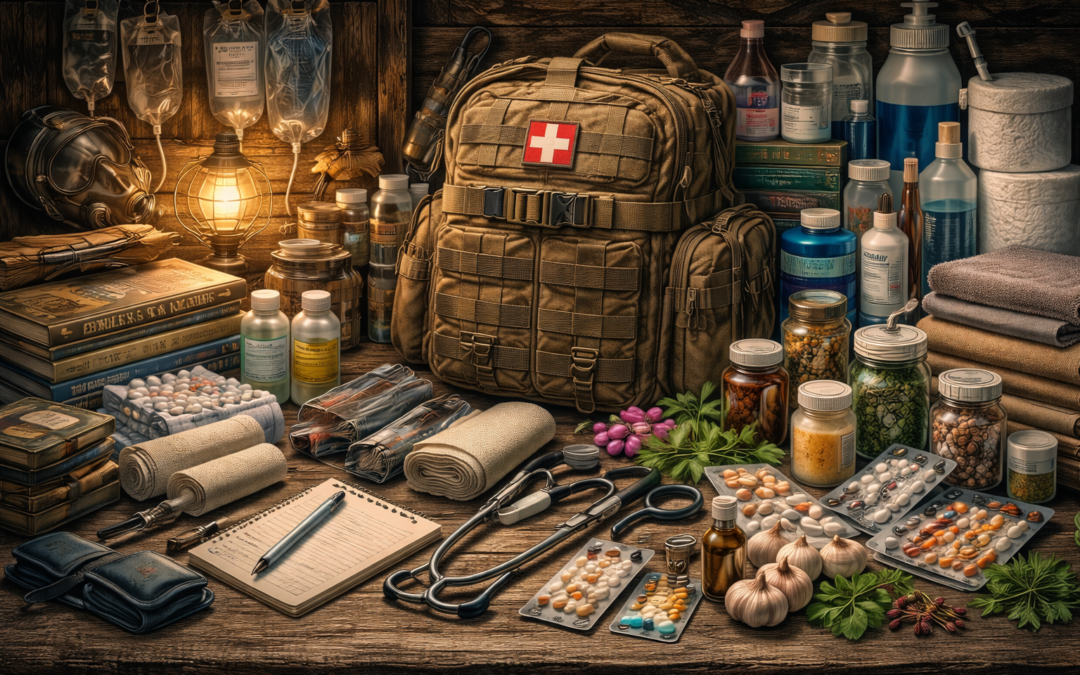
As conditions degrade, especially if firearms are involved, the need for medical training exponentially goes up. Generally, there are three levels of training commonly available. Basic CPR and first aid, Wilderness First Aid, and Tactical Combat Casualty Care.
Basic CPR and first aid are usually available locally for little or no cost. They are generally a few hours to one day long. They are usually taught by fire departments, the Red Cross, or the American Heart Association, which may offer follow-on courses.
Wilderness First Aid or Wilderness First Responder courses go into greater depth on subjects with the expectation that you may be in a remote location and have to render greater aid for longer. This training is focused on the 5 B’s. Breathing, Bleeding, Broken bones and sprains, Blisters, and Bites. These courses are usually more in-depth for subjects such as lightning strikes, altitude sickness, core temperature control, and transport of injured. Training is usually 3 – 10 days long and incorporates scenario training to reinforce and tie together skills.
Tactical Combat Casualty Care or Tactical Emergency Casualty Care courses are based on the MARCH-E algorithm. Massive Hemorrhaging, Airway, Respiration, Circulation, Head injury, Everything else. This training is focused more on traumatic events such as a car wreck or bullet wound. Training is usually 3 – 7 days long and incorporates scenario training under duress. The instructors are intentionally creating extra pressure to give a sample of the chaos you may encounter in these situations.
So which one should you do? Or which one should you do first? If you have to wait to get into a WFA or TCCC class, take the Basic CPR and First Aid class immediately. When it comes to the WFA or TCCC I recommend doing both. Register for whichever one is available first in your area, then get the other one the first chance it comes along. Yes, there will be a good bit of overlap in these two courses, but those are the skills you will want extra training on anyway.
Herbal Medicine
Herbal medicine is a fascinating topic, but it is not a direct replacement for pharmaceuticals without sufficient education and preparation. In very broad general terms, pharmaceuticals are concentrated chemicals to attack bacteria, viruses, fungi, etc… Whereas herbal medicine better supports your natural defenses to attack the bacteria, viruses, fungus, etc… with few negative effects and usually safe enough to use as a preventative.
This also means there is a difference in the time it takes to see an effect. We are all used to the speed of pharmaceuticals, so if we wait until we have the illness, the herbal medicine may take longer than we are used to.
When it comes to growing and harvesting different plant constituents, they may be more potent in certain parts of the plant at different stages of its life cycle. You may want additional or different constituents at different stages of the illness or wound. You will need several years to learn what to plant when, what to harvest, what delivery form to use, and how to treat different conditions.
Sanitation
Personal hygiene is an even bigger deal during a disaster. Explosive diarrhea makes any crisis worse. Ensure you have adequate cleaners for you and your environment: soap, dish soap, laundry soap, bleach, toilet paper, feminine hygiene products, toothpaste, trash bags, shovels, and a plan.
Toilets are activated by water pressure and gravity-based systems. Any water will do, including water you used to clean yourself or the environment. Water you have already cooked with. Water from rain barrels, ditches, or swimming pools. In my case, I am a couple of hundred feet in elevation above the nearest sewage processing site, so the lines are unlikely to fill to a point where they get backed up on me. But if you are in a flatter environment, the lines may fill quickly without pump stations working. Be ready to dig a hole and use a toilet seat on a milk crate if necessary.
Trash is another concern. Without trash collection services, you have to deal with the trash itself and insects and animals attracted to the trash. What can you burn? What can you bury? What can you compost?