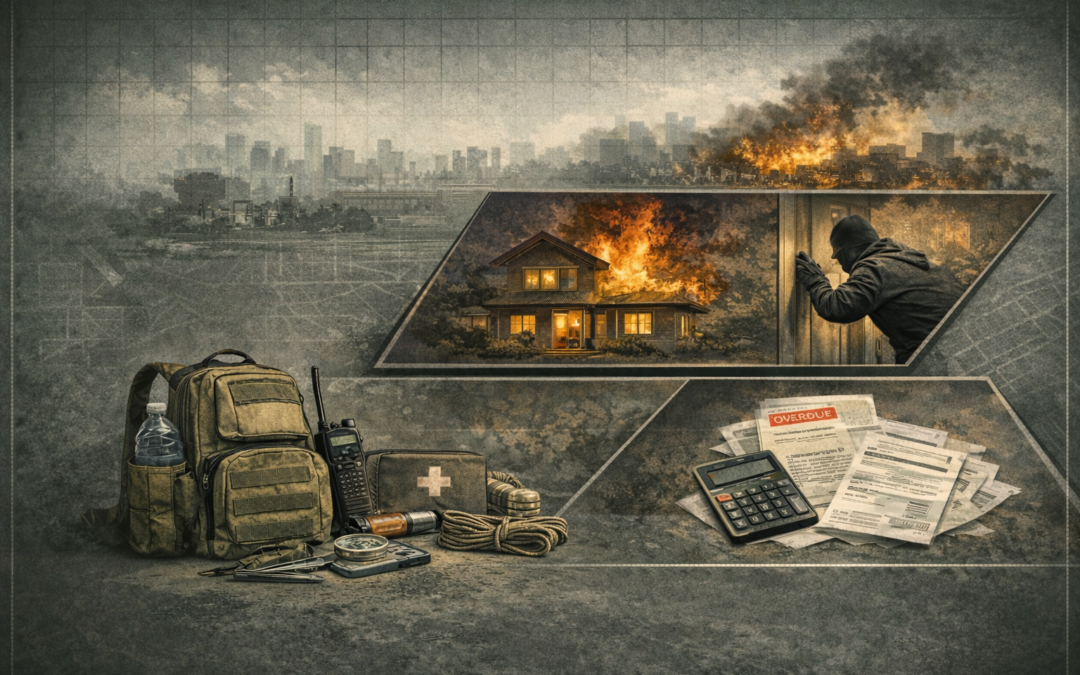
There are various disasters, and many are unique to particular areas. Tornados, volcano eruptions, earthquakes, and floods are examples of disasters that may be confined to specific areas. But regardless of the type of disaster, the effects on systems of support are largely the same. Interruptions to food, water, and energy are the common immediate effects we will address for now.
I grew up in Florida and South Carolina, and I was in several minor hurricanes or on the edge of several hurricanes, so the effects were minor for us. But in 1989, Hurricane Hugo hit us head-on, and it was devastating.
Tropical Depressions form off the west coast of Africa in the warm waters at the end of summer. This is why there is a Hurricane Season, as this is when the conditions are most likely to form these storms. Some Tropical Depressions strengthen and become Tropical Storms; if they gain more strength, they may become hurricanes.
When I was growing up, grocery stores and hardware stores would give out Hurricane Tracking Maps at the beginning of the hurricane season. They would have a map on one side, which I’m sure no one ever actually used, and a list of supplies and ads on the other.
At the beginning of the season, we would make a half-hearted attempt at preparedness by buying a few candles, batteries, and canned foods. But that was about it, and that seemed to be about the level of commitment most people had.
Many storms would form throughout the season, and most would fizzle out and become nothing. But occasionally, a bigger storm would form and was expected to make landfall. The location of landfall is an imprecise slow-moving target when the storm is still far out at sea. So it was normal to be told you’re going to be in the storm’s direct path. Usually, this is when we, and everyone else, rushed to the grocery store and emptied the shelves.
Then the storm would change course slightly, and the next community would do the same thing. It would only take about one of these false threats per season for people to get complacent and take even fewer precautions because they expected the next storm to miss as well.
When Hurricane Hugo hit the Caribbean, it was a Category 4 Hurricane with wind speeds up to 140 mph. It devastated Puerto Rico, the U.S. Virgin Islands, and the British Virgin Islands, killing at least 86 people. Roads, bridges, and power lines were down, and people were in need of shelter, food, water, and electricity.
As the storm started heading toward us, many people started to evacuate. But at this stage, only so many cars would fit on the road. They reversed the eastbound lanes on Interstate 26, so all the lanes were headed inland. But there were only so many hotels, so people had to go further and further to find a place to stay.
My Uncle was one of the people who took his family inland to avoid the storm. He had to go about 100 miles inland to find a hotel. But when the storm hit, one of the tornados that get spun off when a hurricane comes ashore ripped off the roof of his hotel. They were all huddled in a bathtub while the hurricane was passing overhead. Ironically, his home, which was much closer to the shore, didn’t take any significant damage.
By the time Hurricane Hugo reached Charleston, it was a Category 5 Hurricane. To make matters worse, it landed at high tide, generating a 20-foot-high tidal wave, spinning off dozens of tornados, and ripping apart trees, power lines, and buildings. Oh, by the way, now you have 8 hours of 150 mph winds and rain.
We were lucky in that the only home or car damage we sustained was cosmetic. Many people had damage to their homes and cars either from the winds, falling trees, or things like sheds and the contents, becoming missiles in the storm. Every road had numerous trees down as far as you could see.
The next morning, many people were grilling up what meat was in their refrigerators before it went bad. The radio announced several grocery stores that were giving away meat if you could get there and had a way to cook it. The first relief that was coming in was truckloads of free ice if you could get to the Interstate to get it.
The water was contaminated, so you had to boil it if you had a way to do that. Otherwise, they were giving out water at the water towers. However much you could carry. But most people didn’t have many suitable containers. You would see people carrying pots of water and the kids carrying pitchers. I saw two guys fill their cooler with water, then it was too heavy for them to carry.
Power line crews were coming in from all over the Southeast to help clear roads and put up power lines. It took several weeks to restore power. Many people were getting hurt trying to clear fallen trees from houses and roads, including many chainsaw injuries.
With all the standing water everywhere, it was only a few days before the mosquito population exploded. If your house had damage, you could not escape them there. And even in late September, it was still hot and humid.
We were close to an interstate, so about a week after the storm, we were able to drive out of the area with the intent of spending the night in a hotel. However, hotels were packed, and the damage from the storm extended across South Carolina and into a few other states.
We ended up just being able to get something to eat in a restaurant and buying food and ice from a grocery store. One of the strangest things to see once you were able to get out and drive around was how many boats were in forests, neighborhoods, and other places that were insanely far from any body of water.
One of my takeaways from this experience was being able to make your own repairs. Being able to do some basic structural repairs, basic electric, and basic plumbing. As I said, I try to do a major project around the house at least once a year. Not just to sharpen my skills but also so I have the basic materials and tools to do the jobs.
This experience was reinforced working in the Caribbean, Asia, Africa, and the Middle East. In general, people there are much more self-sufficient in making repairs around the home. Granted, it isn’t always as pretty, but it’s functional or a solid short-term solution if they need a specialist.
Last winter, a pipe for the lawn irrigation system burst. It was about a foot down, the yard was a small pond, and the temperature was near freezing. I shut off the water at the meter, found the break, dug it up, pumped out the water, cut and sealed the pipe, and restored the water supply faster than it would have taken a plumber to show up.
I had professional roofers replace the roof on my house, but I had them purchase additional supplies for me to roof my detached garage. The professionals did the part that really mattered, but I got experience doing the garage, which was less important. If I need to repair my roof after a storm, I have that additional material.
The same idea applies to basic car maintenance and repairing things like lawnmowers, electronics, small appliances, etc. Yes, these repairs are time-consuming and probably don’t save any money. But you better understand how things work and have the skill and confidence to fix them if you have to.
A friend of mine is a retired NASA engineer. She told me how, during the last decade or so, they were hiring engineers from the top Universities. If you gave them a blank piece of paper and said, “Design this thing,” they could. But if you built the thing, and it didn’t work, the engineers could not solve the problem.
Someone there became aware of a race team that had had the same problem and figured out a better screening process for engineers. Essentially, they started looking for engineers who had been inquisitive throughout their lives and had fixed or attempted to fix things growing up. These engineers had the ability to work their way through problems and find solutions systematically. From a brain development standpoint, the ability to problem-solve is different from the ability to design, so look for opportunities to problem-solve in new ways.