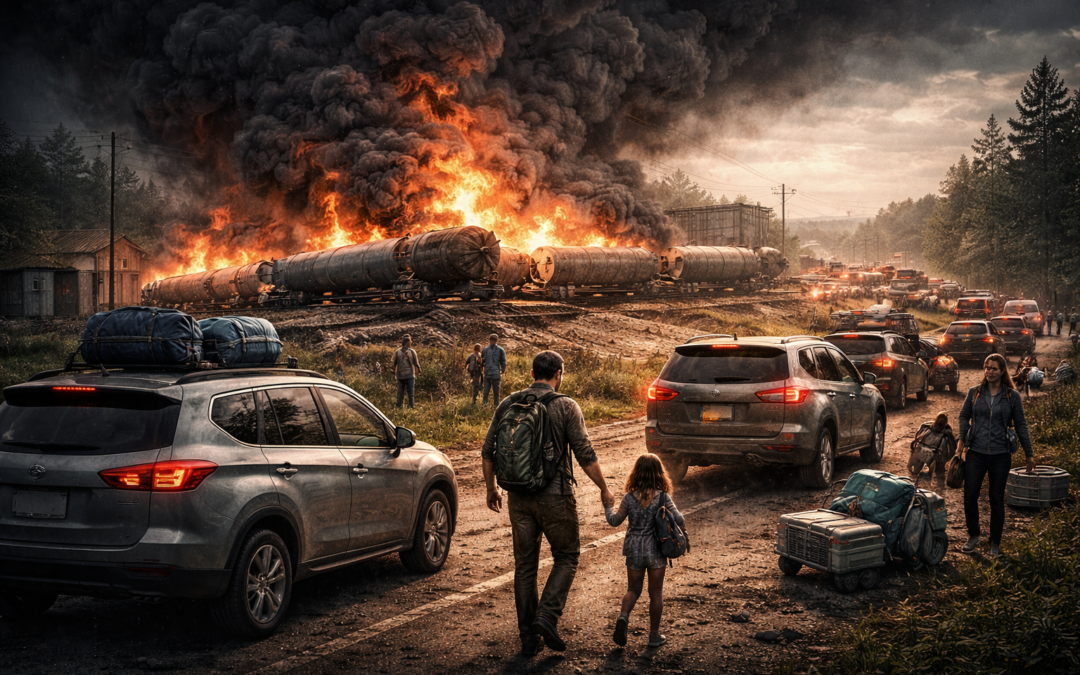
On February 3, 2023, a train traveling through East Palestine, Ohio, derailed. About 9 pm, 38 of its 150 cars came off the tracks, and fire spread to an additional 12 cars. Twenty of the affected cars were carrying chemicals and combustible materials.
The Fire Chief testified that he was only given a 13-minute warning before officials released toxic materials from five of the tankers and allowed the contents to burn off. Additionally, seven and a half miles of a local stream were contaminated, killing approximately 3500 fish.
About 2000 people were initially evacuated. Three days later, the evacuation zone was expanded. On February 8th, the evacuation order was lifted.
While I believe your primary course of action during a disaster should be to shelter at home, where you should have security and additional resources, this is an example of a situation that required evacuation due to the threat of fire, contaminated air, and contaminated water.
During my first summer in San Diego, two major fires broke out. One night, I went to sleep, and the two fires were still many miles away and not considered a threat to my neighborhood. When I woke up the next morning, the two fires merged and raced many miles overnight, burning hundreds of homes.
I looked out the window, and my car and yard were covered in ash. The fire had burned all the way to Interstate 15, only a couple of miles away. Luckily, that portion of the interstate was 8 lanes wide. I had to evacuate, and the main avenue of escape was shut down. Everyone was trying to move toward the ocean, and the only other Interstate that was available. If the fire had managed to jump Interstate 15, it would have consumed all of us stuck in the traffic jam trying to head west.
Sometimes, despite all our preparation, threats emerge so fast and on such a scale that our only course of action is to grab and go. Right now.